
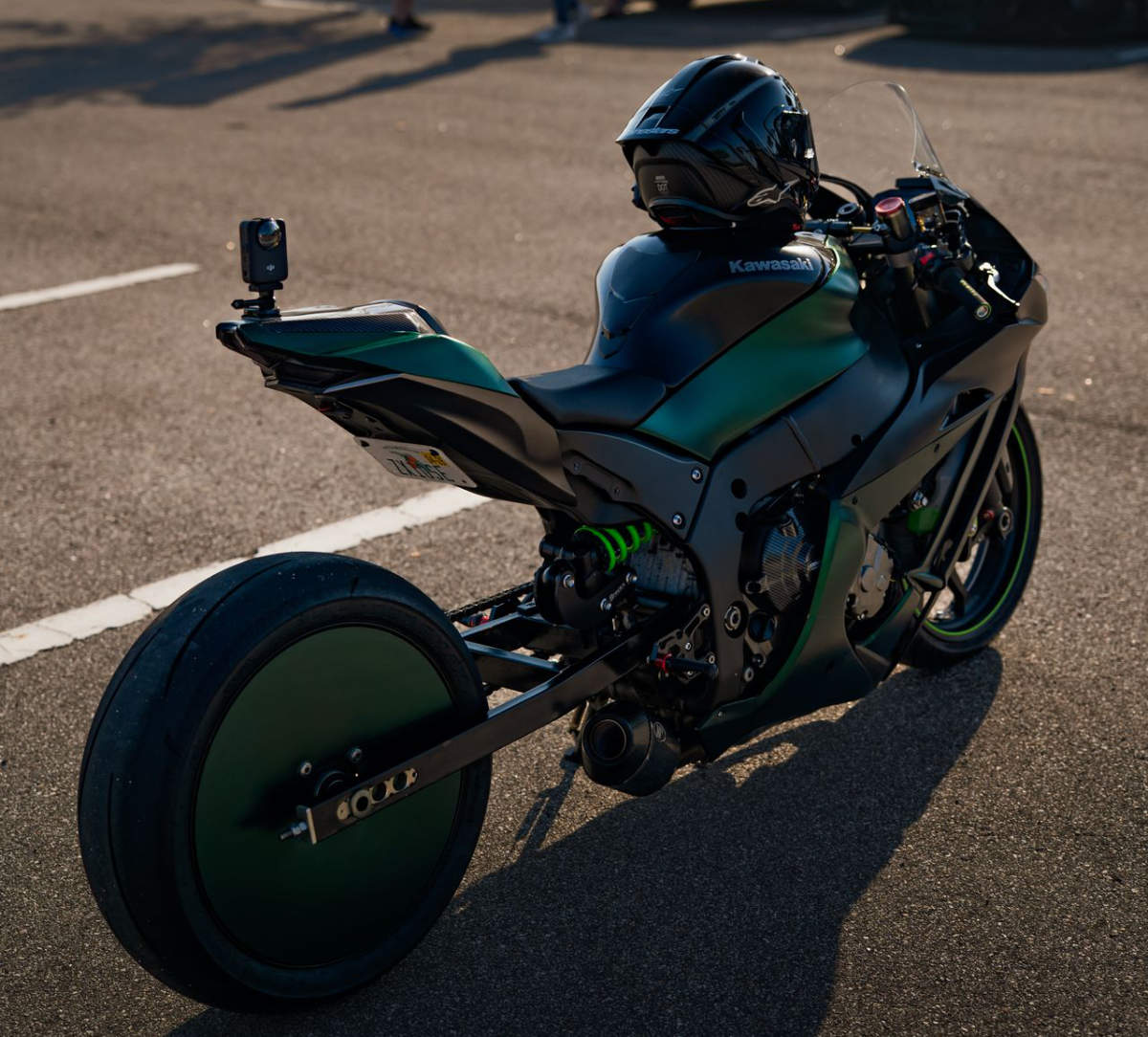
Motorcycle owners often customize their bikes for performance, comfort, appearance, or safety. An aftermarket exhaust, upgraded suspension, different handlebars, or custom lighting can make a motorcycle feel more personal. After an Oregon motorcycle accident, however, those changes may receive attention from insurers, investigators, and attorneys, particularly if someone argues that a modification contributed to the crash or increased the severity of the rider’s injuries.
At Johnston Law Firm, we represent injured motorcyclists in Portland and across Oregon. Motorcycle accidents are among the firm’s primary motor vehicle case types. Below, we explain which modifications may create legal problems and how they can affect an Oregon injury claim.
If an insurer is questioning your motorcycle’s modifications after a collision, call 503-546-3167 or contact a Portland motorcycle accident attorney at Johnston Law Firm for a free consultation.
Legally Required Motorcycle Equipment in Oregon
Before modifying a motorcycle, riders should know which equipment Oregon requires for street operation. Removing required components or replacing compliant equipment with parts that fail applicable standards can create both traffic and personal injury complications.
According to the Oregon DMV Motorcycle & Moped Manual, motorcycles generally must have equipment that includes:
- Headlights: Between one and three white headlights.
- Taillight: At least one red rear taillight.
- Brake light: At least one red stop lamp.
- Turn signals: Required on motorcycles manufactured after 1972.
- Rearview mirror: At least one rearview mirror is required.
- Horn: Motorcycles must have a functioning horn.
- Fenders: Wheels must have required fenders.
- Brakes: At least one hand-operated or foot-operated brake.
Motorcycles must also have a compliant exhaust system, rear reflector, license plate lighting, and other required equipment. Lighting must comply with DOT requirements.
Oregon additionally requires motorcycle operators and passengers to wear DOT-compliant helmets. These requirements provide an important baseline when deciding whether a planned modification is appropriate for street use.
Accepted Motorcycle Modifications in Oregon
Oregon riders have considerable room to personalize their motorcycles, provided the resulting vehicle continues to comply with state and federal safety and equipment standards. The legality of any particular aftermarket component can depend on how it is installed and whether it interferes with required equipment.
Common motorcycle modifications that may be acceptable when properly installed and compliant include:
- Aftermarket seats
- Saddlebags and luggage systems
- Windscreens
- Suspension upgrades
- Street-legal exhaust systems
- DOT-compliant lighting upgrades
- Compliant replacement handlebars
- DOT-compliant tires and wheels
- Cosmetic fairings and bodywork
“Aftermarket” should not automatically be read as “street legal.” Oregon has adopted federal motor vehicle safety standards for various equipment, and ODOT warns that aftermarket products labeled for off-road or show use are not legal for Oregon street use.
Before installing safety-related equipment, riders should therefore verify that the specific product and installation comply with applicable requirements rather than relying solely on advertising or the fact that the part is widely available.
Illegal Motorcycle Modifications in Oregon
A modification can become problematic when it removes legally required equipment, causes the motorcycle to violate equipment standards, or incorporates a component that is not approved for highway operation.
Potentially unlawful modifications include:
- Removing required rearview mirrors
- Removing required wheel fenders
- Installing noncompliant lighting equipment
- Using prohibited headlight or taillight covers
- Removing required turn signals
- Installing a noncompliant exhaust system
- Using equipment designated for off-road use only
For example, Oregon has adopted Federal Motor Vehicle Safety Standard 108 for vehicle lighting. ODOT specifically warns that many aftermarket European-style or “Altezza” tail, brake, and marker lights do not comply with Oregon requirements. Headlight and tail or brake-light covers can also violate applicable standards because they alter light output or required reflectivity.
Under ORS 815.100, operating a vehicle that violates applicable state equipment administrative rules can constitute a traffic violation. Oregon law also contains equipment-specific provisions, such as ORS 815.235 concerning rearview mirrors and ORS 815.250 concerning proper exhaust systems.
Consequences for Illegal Motorcycle Modifications in Oregon
An unlawful modification can have consequences beyond a citation. After a collision, an insurer may argue that the altered motorcycle was less visible, harder to control, or otherwise unsafe.
That does not necessarily make the rider responsible for the accident. There should still be a meaningful connection between the modification and what happened.
Consider a rider using noncompliant rear lighting who is struck from behind at night. The insurer may investigate whether inadequate lighting contributed to the collision. By comparison, an unrelated cosmetic modification is unlikely to carry the same significance.
Evidence may include photographs of the motorcycle, repair and modification records, the damaged components, witness statements, and expert inspection. Preserving the motorcycle can therefore be particularly important when its mechanical condition becomes disputed.
A rider should avoid immediately repairing, discarding, or altering potentially relevant components after a serious crash before discussing evidence preservation with an attorney.
How Can Motorcycle Modifications Affect an Oregon Injury Claim?
Simply modifying a motorcycle does not automatically prevent an injured rider from recovering compensation. The more important question is whether a particular modification was unlawful, unsafe, or contributed to the accident or resulting injuries.
For example, suppose another driver turns left in front of a motorcyclist and causes a collision. The fact that the motorcycle had an aftermarket seat would ordinarily have little connection to determining who caused the crash. A modification affecting the motorcycle’s brakes, lighting, tires, or handling could receive greater scrutiny if those components played a role.
Oregon’s comparative negligence rule under ORS 31.600 can make that connection important. If evidence shows that the rider’s own conduct contributed to the accident, the rider’s compensation may be reduced according to their percentage of fault. Recovery is generally barred when the claimant’s fault is greater than the combined fault of the parties against whom recovery is permitted.
An insurer therefore needs more than the mere existence of a modification. Its relevance to causation and damages matters.
What You Need to Do if You Want to Modify Your Motorcycle in Oregon
A modification that looks harmless can affect lighting, emissions, handling, braking, or another regulated system. Before changing your motorcycle, confirm that both the part and the finished installation are suitable for highway use.
Useful precautions include:
- Check Oregon motorcycle equipment requirements first.
- Verify that aftermarket components meet applicable standards.
- Avoid products labeled for off-road or show use.
- Use qualified professionals for safety-related modifications.
- Keep receipts and documentation for installed components.
- Retain manufacturer specifications and compliance information.
- Confirm required equipment remains fully functional afterward.
ODOT specifically advises consumers to be cautious with aftermarket equipment marketed using phrases such as “DOT approved,” because DOT does not individually approve aftermarket products. Manufacturers are responsible for producing equipment that meets applicable standards.
The rules become especially important when converting an off-road motorcycle for highway use. ODOT states that some dirt bikes cannot be made street legal because their engines do not meet federal emissions requirements. For potentially eligible motorcycles, manufacturer documentation and records of required modifications may be necessary.
Notify Your Insurance Company About Significant Modifications
Insurance is another consideration before investing in custom motorcycle parts. Depending on the policy and insurer, aftermarket components may need to be disclosed, and standard coverage may not necessarily reflect the full value of custom equipment.
Review your motorcycle insurance policy before making substantial changes. Ask whether modifications must be reported, whether additional coverage is available for custom parts, and what documentation would be required if the motorcycle were damaged or totaled. Keep photographs, receipts, installation invoices, and manufacturer information for significant modifications.
Coverage disputes and injury liability are separate issues. A custom part might affect what an insurer will pay for damage to the motorcycle without having any meaningful effect on who caused the collision. Johnston Law Firm handles personal injury litigation as well as insurance coverage and denial matters, which can be important when these issues overlap.
Protect Your Rights As a Rider With Johnston Law Firm
A modified motorcycle does not automatically make you responsible for a crash or eliminate your right to compensation. When an insurer points to aftermarket equipment, the important questions include whether the modification was legal, whether it affected the motorcycle’s safe operation, and whether it actually contributed to the collision or your injuries.
Our Oregon motorcycle accident attorneys can investigate those issues, preserve relevant evidence, address allegations of rider fault, and pursue compensation from the parties responsible for your injuries. We handle Portland personal injury cases on a contingency basis, meaning attorney fees depend on obtaining a recovery rather than requiring an upfront attorney fee. In other words, you don’t pay us unless we secure compensation for you.
If you were hurt in a motorcycle accident in Portland or elsewhere in Oregon, reach out to Johnston Law Firm for a free consultation. Call 503-546-3167 or contact us through our online contact form. Justice Matters. We’re Here to Get It for You.
Contact Us for a FREE Consultation
Practice Areas
Testimonials
Sally Martinez
– Michelle E.
Mr. Johnston and his firm were incredibly thorough in getting us a fair settlement from our insurance company with little to no pressure. We really appreciated having someone who truly cared about us every step of the way. I would highly recommend the Johnston Law Firm to anyone in need of personal injury representation.