
When you are injured in an accident, the financial impact often extends far beyond medical bills. Lost wages can quickly become one of the most pressing concerns, especially if your injuries prevent you from working for weeks or even months. At Johnston Law Firm, we regularly help clients throughout Oregon understand how these losses are calculated and how to ensure they are fully accounted for in a personal injury claim.
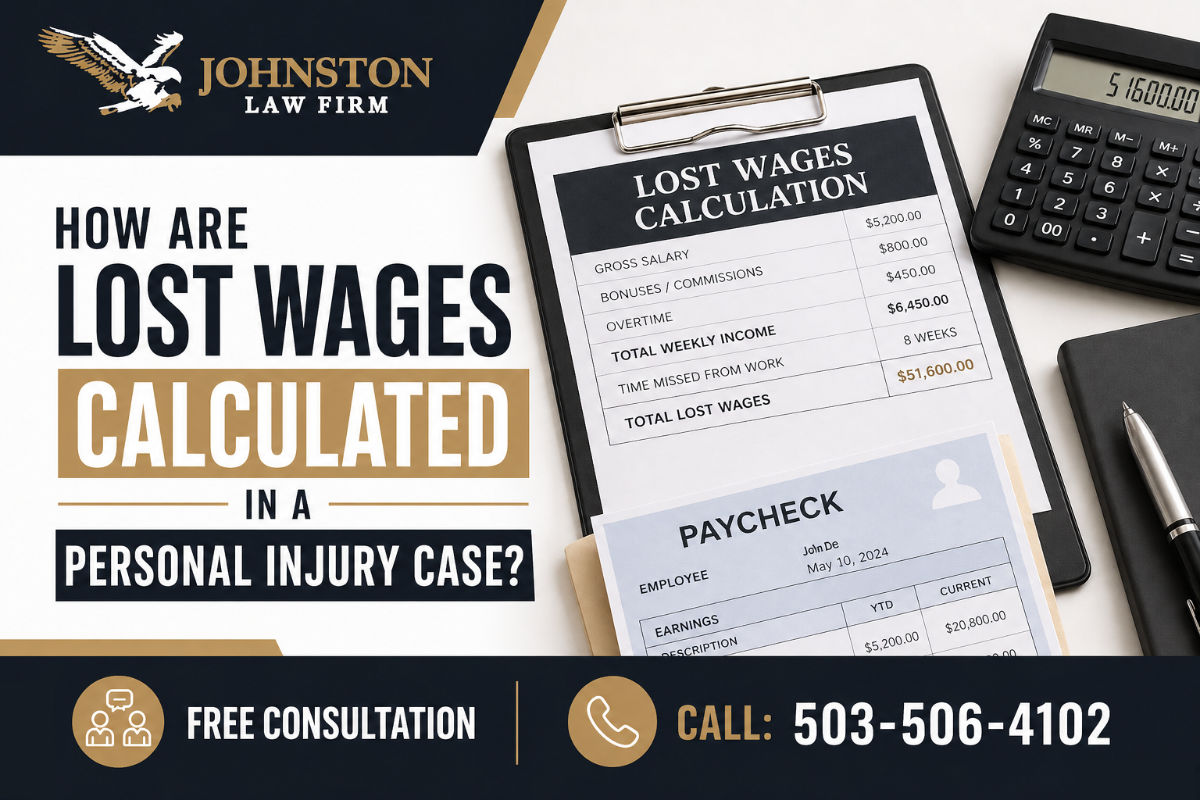
Lost wages are not always as simple as adding up missed paychecks. They can include multiple forms of income, long-term earning potential, and even career disruptions. Knowing how these elements are evaluated can make a meaningful difference in the outcome of your case.
Dealing with lost wages after an injury? Reach out to a personal injury attorney at Johnston Law Firm so we can help you secure every little cent you’re owed! Call us today at 503-496-7989 or contact us online for a free consultation.
What Counts as Lost Wages in a Personal Injury Case?
Lost wages refer to the income you would have earned if the accident had not occurred. This includes more than just your regular salary or hourly pay; it can extend to a range of financial benefits tied to your employment.
In Oregon personal injury claims, economic damages such as lost wages are recoverable when they are properly documented and linked to the accident. Courts and insurers look for clear evidence that your inability to work was directly caused by your injuries.
Common forms of lost wages include:
- Regular Pay: Missed hourly wages or salary during recovery
- Overtime Earnings: Income from extra hours you would have reasonably worked
- Bonuses and Commissions: Performance-based earnings lost due to absence
- Sick Leave or Vacation Time Used: Time off that you were forced to use because of the injury
- Self-Employment Income: Lost business revenue or contracts
Each of these components must be supported with documentation. Without proper proof, insurance companies may challenge or reduce your claim.
How Lost Wages Are Calculated Step by Step
Calculating lost wages involves more than reviewing a single paycheck. The process requires a careful evaluation of your employment history, pay structure, and the duration of your recovery.
For hourly employees, the calculation typically starts with the number of hours missed multiplied by the hourly rate. Salaried employees require a breakdown of annual income into daily or weekly values. However, things become more complex when variable income is involved.
Key factors used in calculating lost wages include:
- Pre-Injury Earnings: Your average income before the accident
- Time Missed From Work: Verified by medical records and employer statements
- Work Schedule Patterns: Including overtime or seasonal fluctuations
- Employment Benefits: Health insurance contributions, retirement matching, and other perks
For example, if a construction worker in Portland earns $25 per hour and misses eight weeks of work, the base calculation would reflect that lost income. If that worker regularly worked overtime, those additional earnings must also be included to reflect the true financial loss.
The Difference Between Lost Wages and Loss of Earning Capacity
Lost wages and loss of earning capacity are often confused, but they represent different types of damages. Lost wages refer to income already missed, while loss of earning capacity addresses future income that may be reduced due to your injuries.
This distinction becomes especially important in serious injury cases. If your injuries prevent you from returning to your previous job or limit your ability to work at the same level, your claim may include compensation for this long-term impact.
Examples of loss of earning capacity include:
- Career Changes: Being forced into lower-paying work due to physical limitations
- Reduced Work Hours: Inability to maintain full-time employment
- Missed Advancement Opportunities: Loss of promotions or career growth
- Permanent Disability: Long-term inability to work at all
Under Oregon law, these future losses must be supported by evidence, often including expert testimony from vocational and economic professionals. This ensures that your claim reflects not just your past losses, but your future financial reality.
Documentation Needed to Prove Lost Wages in Oregon
Strong documentation is essential for recovering lost wages. Insurance companies will not simply accept your word; they require clear, verifiable records that demonstrate both your income and your inability to work.
The most commonly used forms of documentation include:
- Pay Stubs and Tax Returns: Proof of income before the accident
- Employer Statements: Verification of missed work and lost pay
- Medical Records: Evidence linking your injuries to your inability to work
- Work Schedules: Documentation of expected hours or shifts
- Business Records: For self-employed individuals, including invoices and contracts
Incomplete or inconsistent documentation can delay your claim or reduce its value. For example, gaps in medical treatment may lead insurers to argue that you were capable of returning to work sooner than claimed.
At Johnston Law Firm, we help clients gather and organize these records to present a clear and compelling case.
Oregon Laws That Impact Lost Wage Recovery
Oregon law provides a framework for recovering lost wages in personal injury cases. Several statutes play a role in how these damages are calculated and awarded.
Under ORS 12.110, personal injury claims must generally be filed within two years of the accident. Missing this deadline can prevent you from recovering any damages, including lost wages.
ORS 31.600 establishes Oregon’s modified comparative negligence rule. If you are partially at fault for the accident, your compensation will be reduced by your percentage of fault. For instance, if you are found 25 percent responsible, your lost wage recovery will be reduced accordingly.
Additionally, ORS 31.710 addresses certain limitations on non-economic damages, though lost wages are considered economic damages and are typically not subject to caps. This distinction is important because it allows for full recovery of documented financial losses.
Understanding how these laws interact can help you avoid surprises and ensure that your claim is handled properly.
Challenges in Calculating Lost Wages
While the concept of lost wages seems straightforward, disputes often arise during the claims process. Insurance companies may question the extent of your injuries, the necessity of time off, or the accuracy of your income records.
Common challenges include:
- Disputed Medical Necessity: Insurers may argue you could have returned to work sooner
- Variable Income Issues: Fluctuating earnings can make calculations more complex
- Self-Employment Complications: Proving lost business income requires detailed records
- Pre-Existing Conditions: Insurers may claim your inability to work is unrelated to the accident
These challenges highlight the importance of presenting a well-documented and carefully prepared claim. A strong case anticipates these arguments and addresses them with evidence.
How Lost Wages Are Evaluated in Settlement Negotiations
Lost wages play a central role in settlement discussions. They provide a tangible, measurable component of your damages, which often serves as a starting point for negotiations.
Insurance companies typically evaluate lost wages by reviewing your documentation and assessing whether your time off work was reasonable given your injuries. They may attempt to minimize payouts by questioning the duration of your recovery or the necessity of certain treatments.
Settlement versus trial becomes an important consideration here. In a settlement, lost wages are part of the negotiation process; in a trial, they must be proven through evidence and testimony. Trials can result in higher awards, but they also involve more time and uncertainty.
Our attorneys approach negotiations with preparation and strategy. By presenting clear evidence and anticipating insurer arguments, we position your claim for a fair resolution.
Get Legal Help From Johnston Law Firm to Recover Your Lost Wages
If you are struggling with lost income after an injury, you do not have to handle the process alone. Johnston Law Firm helps clients across Oregon build strong claims that accurately reflect their financial losses. Marc A. Johnston brings extensive experience in personal injury law and understands how to present lost wage claims in a way that resonates with insurers and juries alike.
We offer free consultations and work on a contingency fee basis, so you do not pay unless we recover compensation for you. Contact Johnston Law Firm today at 503-496-7989. We are available 24/7 to help you take the next step. Justice Matters. We’re Here to Get It for You.
Contact Us for a FREE Consultation
Practice Areas
Testimonials
Sally Martinez
– Michelle E.
Mr. Johnston and his firm were incredibly thorough in getting us a fair settlement from our insurance company with little to no pressure. We really appreciated having someone who truly cared about us every step of the way. I would highly recommend the Johnston Law Firm to anyone in need of personal injury representation.