
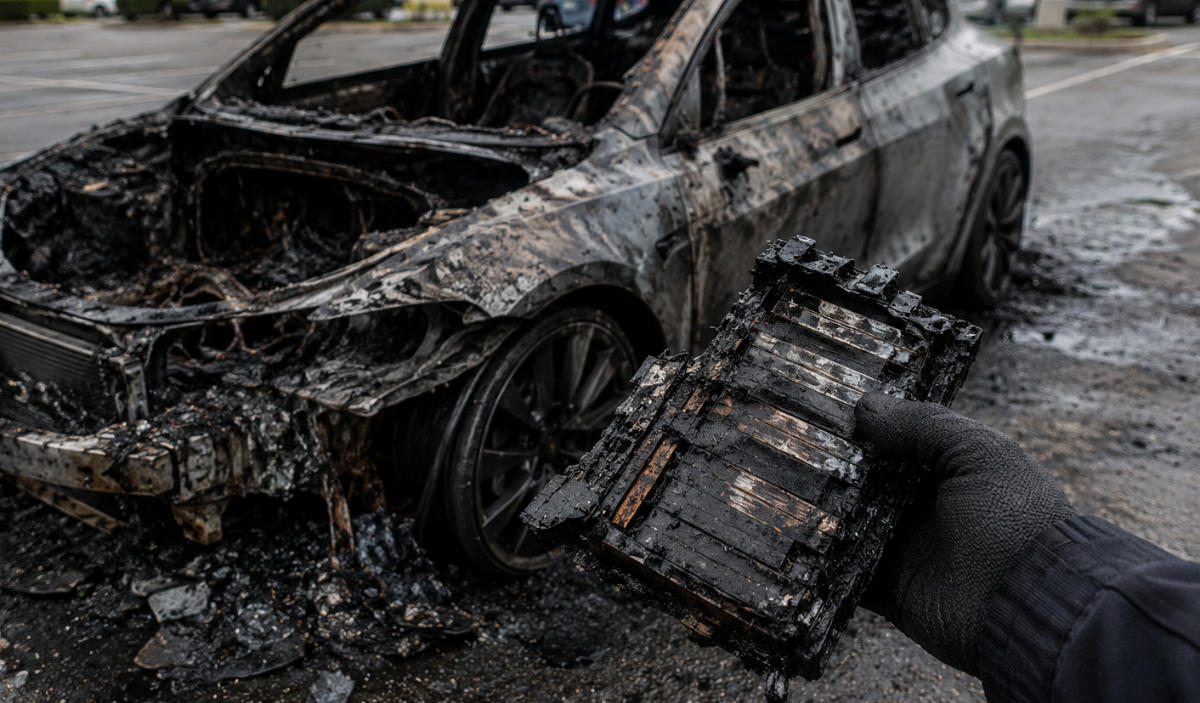
Electric vehicles (EVs) have become increasingly common on Oregon roads, offering lower emissions and advanced technology. However, when an EV is involved in a serious collision or battery malfunction, the lithium-ion battery can ignite or experience thermal runaway. Thus, it can produce intense heat, toxic gases, and fires that are difficult to extinguish. People involved in such accidents often suffer severe burns, respiratory injuries, and long-term medical complications that require extensive treatment.
Determining who is legally responsible for these injuries is not always straightforward. Unlike many traditional vehicle accidents, an EV battery fire may involve multiple parties, from a negligent driver to a vehicle manufacturer or battery supplier. Identifying the correct defendants is essential for recovering full compensation. At Johnston Law Firm, we help injured Oregonians investigate these complex claims and pursue accountability wherever the evidence leads.
If you’ve sustained burns or other injuries due to an EV vehicle battery after a crash, contact a burn injury attorney at Johnston Law Firm or call us at 503-546-3167 for a free consultation.
First Off… Liability Depends on Why the Battery Fire Occurred
Not every EV battery fire has the same cause, and that distinction can significantly affect who may be held liable. In some cases, the battery ignites because another driver’s negligence caused a high-impact collision. In others, the battery itself may contain a manufacturing or design defect that turns a relatively minor crash into a catastrophic fire.
Oregon personal injury claims generally require injured individuals to establish that another party’s negligence or wrongful conduct caused their injuries. Depending on the circumstances, a burn injury claim may involve several legal theories, including negligence, product liability, or both.
Examples include:
- Negligent driver: Causes the collision that damages the battery and triggers the fire.
- Vehicle manufacturer: Produces an EV with an unreasonably dangerous battery system.
- Battery manufacturer: Supplies defective lithium-ion battery cells or components.
- Repair facility: Performs improper repairs that compromise battery safety.
- Commercial fleet owner: Fails to maintain vehicles used for business operations.
Because these cases often involve overlapping liability, a thorough investigation is necessary before deciding whom to pursue.
When Another Driver May Be Responsible for Your Burn Injuries
Many EV battery fire cases begin as ordinary motor vehicle collisions. A distracted driver runs a red light, a speeding motorist rear-ends another vehicle, or an impaired driver crosses the centerline. The impact damages the EV’s battery pack, resulting in a fire that causes severe burns.
In these situations, the negligent driver may be legally responsible for all reasonably foreseeable injuries flowing from the crash, including burn injuries caused by the battery fire. Oregon follows a modified comparative negligence system under ORS 31.600, meaning an injured person may still recover compensation if they are not more than 50 percent responsible for the accident. Any recovery is reduced by the injured person’s percentage of fault.
Insurance companies sometimes argue that the battery fire, rather than the collision itself, caused the burns. Legally, that distinction does not necessarily eliminate the driver’s liability. If the collision set the chain of events in motion, the at-fault driver may still be responsible for the resulting damages.
Can You Sue the EV Manufacturer?
Sometimes the collision is only part of the story. An EV battery may ignite because of an internal defect that causes thermal runaway, excessive heat generation, or delayed ignition. In those situations, Oregon’s product liability laws may allow injured victims to pursue claims against companies involved in designing or manufacturing the vehicle.
Oregon’s Product Liability Act (ORS Chapter 30) allows injured consumers to seek compensation when an unreasonably dangerous product causes harm. A manufacturer does not necessarily have to act intentionally to be liable. Instead, the issue often becomes whether the product was defective when it entered the marketplace.
Potential defects may include:
- Design defects: The battery system was inherently unsafe despite proper manufacturing.
- Manufacturing defects: Errors during production created dangerous battery cells.
- Failure to warn: The manufacturer did not adequately disclose known fire risks.
- Defective battery management systems: Software or hardware failed to regulate battery temperatures.
- Insufficient crash protection: The battery housing failed to protect the cells during foreseeable collisions.
These claims often require engineers, fire investigators, and battery experts to analyze what happened before liability can be determined.
Battery Manufacturers and Suppliers May Also Share Liability
Electric vehicle battery systems are assembled from numerous components that often come from different companies. A defect in a single battery cell, cooling system, separator, or electrical connector can dramatically increase the risk of thermal runaway after a collision. For that reason, an investigation may extend beyond the vehicle manufacturer itself.
Under Oregon product liability law, multiple companies involved in placing a defective product into the stream of commerce may be legally responsible for resulting injuries. Depending on the evidence, liability may include battery manufacturers, component suppliers, distributors, or other entities involved in the battery’s design and production.
Potentially responsible parties include:
- Battery cell manufacturers: Produce defective lithium-ion cells prone to overheating.
- Component suppliers: Manufacture faulty cooling systems, wiring, or battery management hardware.
- Distributors: Sell defective battery systems without addressing known safety concerns.
- Importers: Introduce defective products into the U.S. market.
- Testing laboratories: In limited circumstances, negligent testing or certification practices may become relevant.
These claims frequently involve highly technical evidence. Fire investigators, engineers, and battery specialists often work together to determine precisely where the failure originated and whether it could have been prevented.
More Than One Party May Be Liable for Your Injuries
Many EV battery burn cases involve multiple defendants rather than a single at-fault party. One driver’s negligence may have caused the collision, while a defective battery transformed what otherwise might have been a survivable crash into one involving catastrophic burn injuries.
This is one reason these claims require a broader investigation than many standard car accident cases. Instead of accepting the insurance company’s initial explanation, your car accident attorney should examine every contributing factor and every potentially responsible party.
For example:
- A distracted driver causes a collision.
- The impact damages a defectively designed battery pack.
- The battery enters thermal runaway.
- Occupants suffer severe burns while attempting to escape.
- Multiple insurance policies and corporate defendants become involved.
Identifying every available source of compensation is particularly important when victims require skin grafts, reconstructive surgery, lengthy hospital stays, rehabilitation, or lifelong medical care. Limiting a claim to one defendant too early may leave substantial compensation unavailable.
Compensation Available for Burn Injuries Caused by EV Vehicle Batteries After an Oregon Car Accident
Burn injuries are among the most expensive and life-altering injuries a person can experience. Recovery often extends far beyond the emergency room, involving specialized burn centers, reconstructive procedures, physical therapy, occupational therapy, and psychological counseling. Many victims are unable to return to work for months, while others face permanent disabilities.
Depending on the facts of your case, compensation may include both economic and non-economic damages, such as:
- Medical expenses: Emergency care, surgeries, medications, rehabilitation, and future treatment.
- Lost income: Wages lost during recovery and diminished future earning capacity.
- Pain and suffering: Physical pain, emotional trauma, and reduced quality of life.
- Disfigurement and permanent disability: Compensation for lasting physical changes and functional limitations.
- Property damage: Repair or replacement of your vehicle and personal belongings.
- Wrongful death damages: Available when an EV battery fire results in a fatality.
Oregon law also establishes filing deadlines for personal injury claims. In many situations, ORS 12.110 provides a two-year statute of limitations, although exceptions may apply depending on the circumstances. Waiting too long can jeopardize your ability to pursue compensation, making early legal guidance especially important.
Preserving Evidence Can Make or Break Your Case
The condition of the vehicle and battery immediately after the fire may provide the strongest evidence in your case. Unfortunately, valuable evidence can disappear quickly. Burned vehicles are sometimes salvaged, repaired, or destroyed before investigators have an opportunity to examine them, making it much more difficult to determine what caused the fire.
As soon as possible after an accident, consider taking steps to preserve evidence such as photographs, medical records, witness information, and insurance correspondence. Your attorney may also send preservation letters requesting that the vehicle, battery pack, electronic data, and other physical evidence remain intact for expert inspection.
Because EV battery cases often involve sophisticated engineering questions, preserving the vehicle itself can be every bit as important as documenting your injuries. Early action frequently gives investigators the best opportunity to identify whether negligence, a product defect, or both contributed to the incident.
Burned by an EV Lithium-Ion Battery After a Crash? Reach Out to Marc A. Johnston at Johnston Law Firm
Determining who should be held responsible after an EV lithium-ion battery fire is rarely simple. These cases often involve complex engineering issues, multiple insurance carriers, and several potentially liable companies. At Johnston Law Firm, we investigate every aspect of the incident to determine who caused your injuries and pursue the compensation you deserve. Whether your claim involves a negligent driver, an automaker, a battery manufacturer, or several responsible parties, we are prepared to advocate for your interests every step of the way.
Marc A. Johnston has dedicated his career to helping injured individuals stand up to insurance companies and large corporations. We handle personal injury cases on a contingency fee basis, which means you pay no attorney’s fees unless we recover compensation for you. If you suffered burn injuries because of an EV lithium-ion battery fire anywhere in Portland or across Oregon, call Johnston Law Firm today at 503-546-3167 or contact us online for a free consultation.
Justice Matters. We’re Here to Get It for You.
Contact Us for a FREE Consultation
Practice Areas
Testimonials
Sally Martinez
– Michelle E.
Mr. Johnston and his firm were incredibly thorough in getting us a fair settlement from our insurance company with little to no pressure. We really appreciated having someone who truly cared about us every step of the way. I would highly recommend the Johnston Law Firm to anyone in need of personal injury representation.