
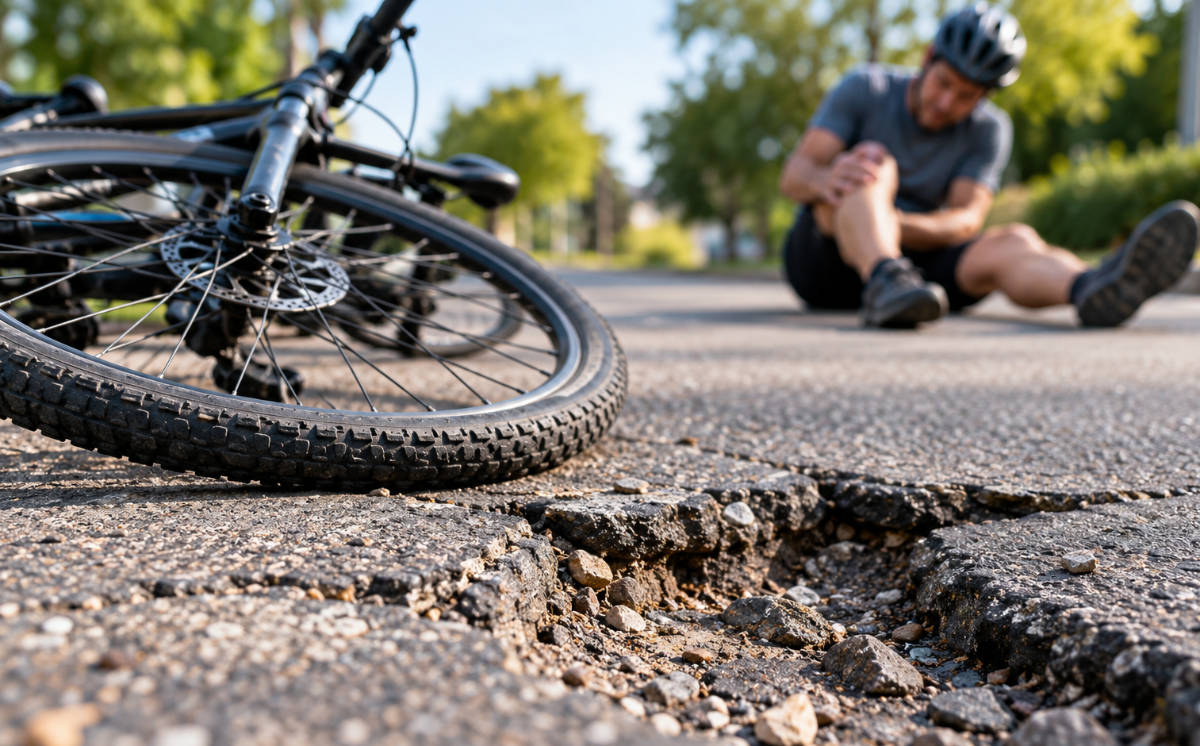
When a bicycle accident happens because of a pothole, broken pavement, unsafe construction zone, poor visibility, or another infrastructure problem, determining responsibility can be more complicated than in a typical collision. In Portland, responsibility for maintaining streets and transportation infrastructure may involve the City of Portland or another government entity. Claims against public bodies are also subject to rules and deadlines that do not apply in the same way to ordinary negligence cases.
At Johnston Law Firm, we help injured cyclists examine what caused their crashes and identify the parties that may be legally responsible.
If dangerous infrastructure contributed to your bicycle accident, call our Portland bicycle accident lawyers at (503) 546-3167 or contact us for a free consultation. We can investigate the condition, determine who was responsible for it, and explain the requirements that may apply to your claim.
When Portland May Be Liable for Dangerous Bicycle Infrastructure
The fact that a bicycle accident happened on a Portland street does not automatically make the city responsible. A claim generally requires evidence connecting the dangerous condition to a legally actionable act or omission by the responsible public body.
Under the Oregon Tort Claims Act, ORS 30.265 generally makes public bodies subject to actions for their torts and those of their officers, employees, and agents, subject to statutory limitations and immunities. The statute also provides immunity for certain discretionary functions or duties. That distinction can become important in infrastructure cases because decisions about how transportation systems are planned may raise different legal issues from failures involving the implementation or maintenance of infrastructure.
Portland’s transportation system includes streets, bike lanes, bridges, traffic control devices, sidewalks, and other infrastructure managed by the Portland Bureau of Transportation (PBOT). PBOT states that it monitors conditions of pavement, bridges, streetlights, and traffic signals as part of its asset-management responsibilities.
Road and Infrastructure Hazards That Can Cause Bicycle Accidents
Cyclists are particularly vulnerable to roadway defects. A pothole that creates an uncomfortable bump for a motorist can throw a cyclist from a bicycle. Likewise, debris or an obstruction that a driver can safely maneuver around may force someone riding in a bike lane directly into moving traffic.
Potential infrastructure hazards include:
- Potholes and pavement defects: Deep holes, cracked pavement, or uneven surfaces can cause cyclists to lose control.
- Unsafe construction zones: Poorly placed barriers, equipment, or inadequate traffic control can create unexpected dangers.
- Damaged bike lanes: Deteriorated pavement or obstructions may leave cyclists without a safe path forward.
- Poor visibility: Obstructed sight lines can make cyclists difficult for motorists to see at intersections.
- Defective signs or signals: Missing, damaged, or malfunctioning traffic controls may contribute to serious collisions.
- Debris and roadway obstructions: Objects within a bicycle lane can force riders into traffic or cause falls.
PBOT specifically accepts reports involving potholes, sinkholes, urgent road hazards, work-zone hazards, visibility, signs, signal timing, and other safety concerns affecting people biking.
What Must You Prove in a Claim Against the City?
A successful claim requires more than showing that the road was dangerous. We need to connect the hazardous condition to your accident and establish a legal basis for holding the responsible public body accountable.
Evidence may need to address how long the dangerous condition existed, whether it had previously been reported, who controlled or maintained the location, and whether reasonable steps were taken after the problem became known.
For example, suppose a cyclist hits a severe pothole, loses control, and suffers a traumatic brain injury. Photographs taken after the crash could establish the pothole’s size and location. Prior complaints or maintenance records could potentially provide additional evidence concerning whether the hazard had previously come to the attention of the responsible entity.
PBOT provides public mechanisms for reporting potholes and road hazards and asks people submitting reports to provide an approximate address and description. For other traffic safety concerns, it accepts reports involving issues such as visibility, signs, and sight lines.
These kinds of records may become important when reconstructing what happened before an accident.
Oregon Has Special Deadlines for Claims Against Public Bodies
One of the biggest differences between a conventional bicycle accident claim and a claim involving the City of Portland is timing. Waiting for the ordinary personal injury deadline without considering the Oregon Tort Claims Act could create a serious problem.
Under ORS 30.275, notice of most non-wrongful-death claims against an Oregon public body generally must be provided within 180 days after the alleged loss or injury, subject to the statute’s provisions and exceptions. The statute also addresses what can satisfy the notice requirement and generally requires an action covered by the provision to be commenced within two years.
The 180-day notice issue makes early investigation particularly important.
You may still be receiving medical treatment six months after a serious bicycle crash. Evidence at the accident location, however, can change much sooner. A pothole could be repaired, construction equipment could disappear, pavement could be resurfaced, or surveillance recordings could be overwritten. Identifying the potentially responsible government entity and preserving evidence should therefore begin as early as reasonably possible.
Evidence That Can Strengthen an Infrastructure Accident Claim
Infrastructure cases can be evidence-heavy because we may need to establish both what caused the crash and why another party should bear legal responsibility for that condition. At Johnston Law Firm, we can investigate beyond the immediate accident scene rather than relying solely on your recollection of what happened.
Depending on the circumstances, useful evidence may include:
- Scene photographs: Images can document pavement defects, debris, sight-line problems, signage, and surrounding conditions.
- Video footage: Nearby businesses, residences, vehicles, or public cameras may have captured the accident or hazard.
- Witness statements: Other cyclists, motorists, pedestrians, or residents may have seen the crash or dangerous condition.
- Prior complaints: Reports concerning the same hazard may help establish its history before your accident.
- Maintenance records: Records may show inspections, repairs, reported problems, or previous work at the location.
- Medical evidence: Treatment records can connect your injuries and resulting expenses to the bicycle accident.
- Expert analysis: Engineering, accident reconstruction, medical, or financial professionals may help address disputed issues.
Timing matters here, too. The physical condition of a Portland street can change quickly after an accident, especially when the hazard requires urgent repair.
Multiple Parties May Share Responsibility for the Accident
Not every infrastructure-related bicycle accident is solely about the city. Sometimes several acts or conditions combine to cause one crash.
Imagine that a cyclist encounters an obstruction in a bike lane and moves around it. At the same moment, a distracted driver fails to leave sufficient space and strikes the cyclist. The infrastructure problem and the driver’s conduct could both become relevant to determining responsibility.
A contractor may also become part of the investigation when a construction zone is involved. Portland specifically accepts reports about hazards involving construction staging, fencing, utility cuts, traffic control, and other work-zone equipment, and its reporting process asks for the contractor’s name when known.
Our attorneys can investigate the entire sequence rather than assuming one party must bear all responsibility. This may mean reviewing the conduct of a motorist, contractor, government entity, property owner, or another potentially responsible party.
Your Own Conduct Can Affect Your Oregon Bicycle Accident Claim
Insurance companies and defendants may argue that a cyclist contributed to an accident by riding too quickly for the conditions, failing to keep a proper lookout, or otherwise contributing to the crash. An allegation of fault does not automatically resolve the case.
Oregon applies modified comparative negligence under ORS 31.600. The statute provides that a claimant’s negligence does not bar recovery when the claimant’s fault is not greater than the combined qualifying fault against which it is compared. However, any damages awarded are reduced according to the claimant’s percentage of fault.
Suppose, for example, a cyclist suffers $200,000 in damages and is found 20 percent responsible for the accident. Applying comparative fault alone would reduce those damages by 20 percent, to $160,000.
This is why evidence matters when fault is disputed. We can examine the physical scene, witness accounts, video, road conditions, and other evidence rather than accepting an insurer’s version of how the accident occurred.
Contact Our Attorneys at Johnston Law Firm if Dangerous Infrastructure Caused Your Bicycle Accident
When a pothole, unsafe bike lane, construction hazard, or another infrastructure problem contributes to a serious bicycle accident, determining who is responsible may require a detailed investigation. Claims involving government entities can add another layer of complexity because special notice requirements, deadlines, immunities, and liability rules may apply. At Johnston Law Firm, we can investigate the infrastructure, identify potentially responsible parties, and help you determine your legal options.
Led by Marc A. Johnston, our firm represents injured people in Portland and throughout Oregon. We offer a free consultation and handle personal injury cases on a contingency fee basis, meaning our attorney fee depends on obtaining compensation for you rather than requiring attorney fees upfront. Call (503) 546-3167 to discuss your bicycle accident with our team.
Justice Matters. We’re Here to Get It for You.
Contact Us for a FREE Consultation
Practice Areas
Testimonials
Sally Martinez
– Michelle E.
Mr. Johnston and his firm were incredibly thorough in getting us a fair settlement from our insurance company with little to no pressure. We really appreciated having someone who truly cared about us every step of the way. I would highly recommend the Johnston Law Firm to anyone in need of personal injury representation.