
Car accidents can be confusing and stressful, especially when the people involved offer conflicting stories about what happened. Drivers who know they caused the collision often try to protect themselves by giving incomplete statements or shifting blame to the other party. This is one of the primary reasons Oregon law encourages prompt reporting and documentation by law enforcement.
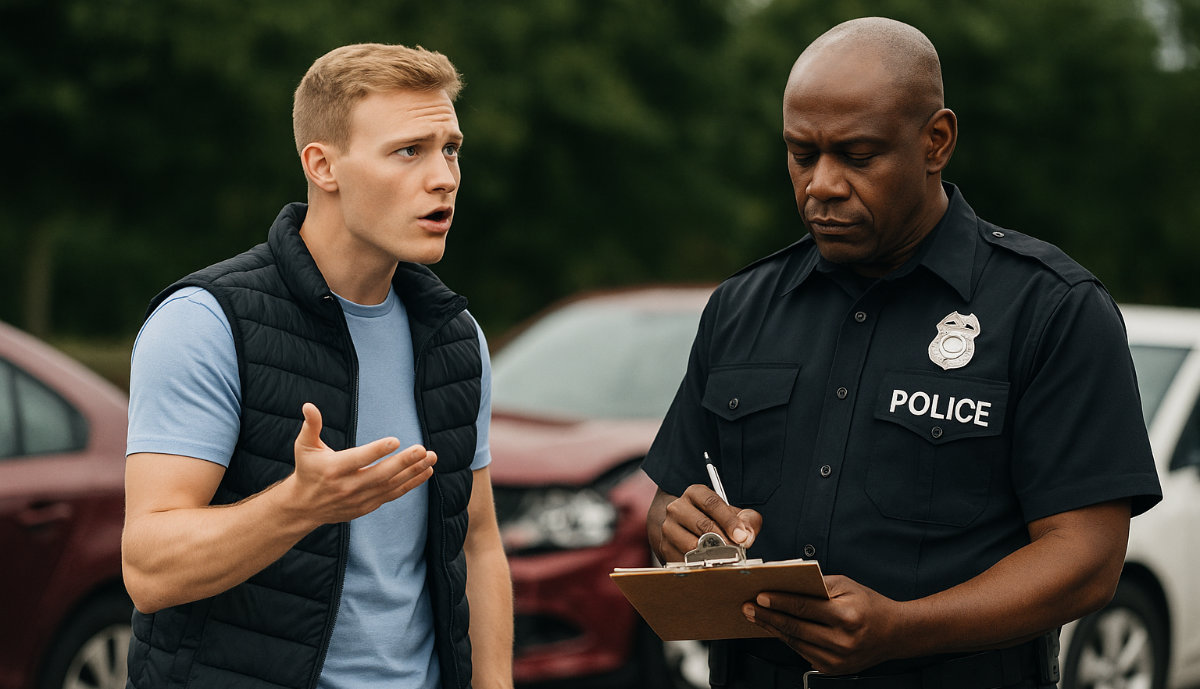
A police report helps create a clearer record at a moment when emotions run high, and memories can be unreliable. Understanding when a report is required and how it affects your claim can make a significant difference in how your case unfolds. It also helps protect you from false statements made by the other driver or their insurance company.
The Importance of Police Reports in Auto Accidents
A police report provides an official, third-party account of an accident. It is often the first document insurance adjusters review, and it can influence how liability is evaluated. The report typically includes statements from the drivers, witness observations, the officer’s preliminary findings, and details such as road conditions or visible vehicle damage. This can be critical when one party is dishonest or attempting to minimize their role in the crash.
Police officers are trained to identify inconsistencies and gather impartial information. They may take photos, measure skid marks, or speak with independent witnesses. While their initial findings are not final determinations of fault, they do carry weight. Insurance companies frequently rely on these details when deciding whether to accept or deny a claim.
Police reports may include:
- Basic contact and insurance information for all parties
- Diagram or narrative of the accident
- Weather and roadway conditions
- Witness names and statements
- Observations of possible violations such as speeding or distracted driving
Even in minor collisions, having an official report can help protect your rights later.
When Oregon Law Requires You to File an Accident Report
Oregon has specific rules about when a driver must file an accident report with the Department of Motor Vehicles. While the terms “police report” and “accident report” are sometimes used interchangeably, they refer to different obligations. A police report is created by an officer at the scene. An Oregon DMV accident report must be filed by the driver when certain criteria are met.
Drivers must file an Oregon Traffic Accident and Insurance Report if any of the following apply:
- Damage to any vehicle exceeds one thousand five hundred dollars
- Any vehicle must be towed from the scene
- Anyone is injured, regardless of the severity
- Property damage exceeds one thousand five hundred dollars
You are required to file this report within 72 hours of the accident. If you fail to file, your license may be suspended even if the other driver was at fault. Filing the report does not admit fault. Instead, it documents your side of the accident and ensures that you remain in compliance with Oregon law.
Why Filing a Police Report Helps Protect Your Claim
Even when the law does not require a police response, having an officer document the incident can be extremely beneficial. Insurance companies are more skeptical of claims that lack an official report. In disputes where one driver lies or changes their story, the police report often becomes the most reliable record.
Filing a police report also protects you from fraudulent claims. If the other driver later says you caused more damage than you did or claims injuries that did not appear at the scene, the officer’s findings can help counter these false statements. In addition, officers sometimes issue citations. While a citation does not automatically prove liability, it does support arguments about the other driver’s negligence.
A police report helps support your claim through:
- Documentation of the crash before vehicles are moved
- Independent witness statements collected early
- Official observations that may highlight unsafe driving
- A timeline that insurers can use to evaluate fault
The more accurate and immediate the documentation, the more difficult it becomes for the at-fault driver to distort the facts.
How Police Reports Affect Insurance Claims in Oregon
Insurance adjusters rely heavily on police reports because they provide an impartial narrative. Even though officers do not determine legal liability, their observations help guide the insurer’s investigation. If the report notes that one driver ran a red light, was speeding, or appeared distracted, the insurer may be quicker to accept responsibility on behalf of their insured.
However, insurance companies do not always accept police findings without question. If there is conflicting information or unclear evidence, the adjuster may continue investigating. This is why supporting documentation such as photos, witness statements, and medical records remains vital. The police report strengthens your claim, but it is one part of a larger body of evidence.
Police reports can influence claims by:
- Supporting your version of events
- Helping your attorney identify key witnesses
- Documenting early injury symptoms
- Outlining any violations or contributing factors
The insurance company’s goal is to minimize payouts. A strong police report makes it harder for them to dispute your claim or shift blame unfairly.
Challenging a Police Report
Police reports are important, but they are not perfect. Officers often arrive after the collision has occurred, and their perspective is limited to what they observe upon arrival. If the other driver lies, appears confident, or provides misleading details, those statements may make their way into the report. This is particularly frustrating when you know the information is inaccurate.
Fortunately, police reports can be challenged. If you notice false statements or factual errors, you can request a supplemental statement or correction. Your attorney can assist with this process to ensure your voice is heard. Sometimes the officer may not change the report, but your supplemental document becomes part of the record. In litigation, your attorney can present evidence that contradicts the report, including photos, expert analysis, or testimony from neutral witnesses.
Common reasons to challenge a report include:
- Incorrect descriptions of how the collision occurred
- Missing witness statements
- Failure to note visible injuries
- Misidentification of the primary contributing factor
- Inclusion of false information provided by the other driver
Challenging a report is not about arguing with the officer. It is about ensuring that the documented record reflects the truth and does not give the other driver an unfair advantage.
Why Calling the Police Is Still Wise in Minor Collisions
Many people choose not to call the police after a minor crash. They may believe the damage is minimal or trust that the other driver will cooperate. Unfortunately, minor accidents often turn into major headaches when the other driver changes their story, denies involvement, or claims new injuries days later. Without a police report, the dispute becomes far more difficult to resolve.
Even if the injuries seem minor, symptoms can develop over time. Whiplash, soft tissue injuries, or concussions may not appear immediately. A police report helps document that the crash happened and that you sought help promptly. It also provides a foundation for your medical claim.
Calling the police is especially important when:
- The other driver appears impaired or aggressive
- Fault is unclear or being disputed
- The other driver has no proof of insurance
- Vehicles are blocking the road or creating hazards
- You suspect the other driver may lie about the details
Early documentation can spare you from significant complications later in the claims process.
Speak to an Attorney Today About Your Car Accident Police Report
If you were involved in a car accident in Oregon and have questions about police reports, the Johnston Personal Injury Law Firm is here to help. These documents play an important role in the claims process, especially when facts are being disputed or the other driver is not being honest. Understanding your rights and obligations early can prevent missteps that hurt your case.
Marc A. Johnston has extensive experience navigating complex accident claims and challenging inaccurate reports when necessary. Contact us today for a free consultation. Our team will review your case, explain your options, and help you take the next step toward protecting your claim and securing fair compensation.
Contact Us for a FREE Consultation
Practice Areas
Testimonials
Sally Martinez
– Michelle E.
Mr. Johnston and his firm were incredibly thorough in getting us a fair settlement from our insurance company with little to no pressure. We really appreciated having someone who truly cared about us every step of the way. I would highly recommend the Johnston Law Firm to anyone in need of personal injury representation.