
After a car accident, details matter. What happened in the seconds before impact often determines who is responsible and how much compensation is available. While police reports and witness statements are important, video footage from nearby businesses or traffic cameras can provide a clearer, more objective account of events. In Oregon, this kind of evidence can be decisive, especially when fault is disputed.
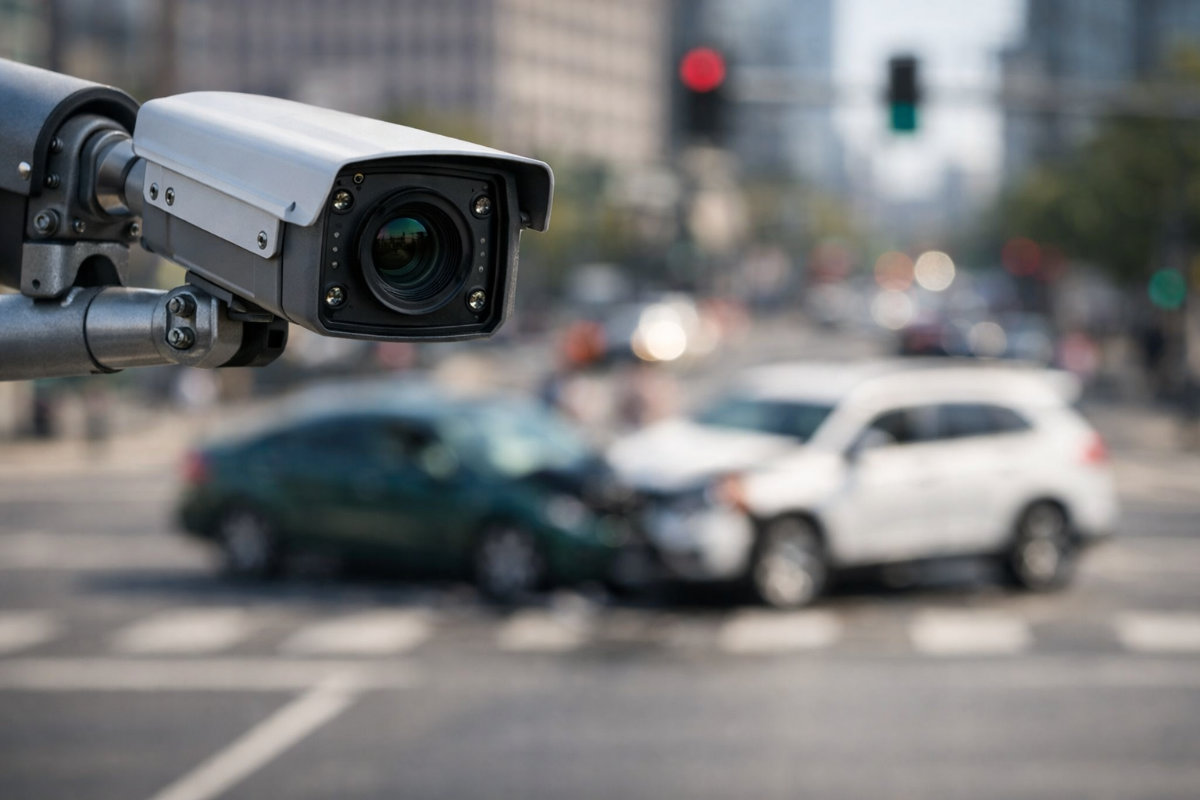
The challenge is that video footage is not automatically preserved or easy to access. Many recordings from traffic cameras, nearby businesses, residential security systems, and even vehicle-mounted cameras are deleted within days, sometimes within hours. Knowing how to obtain business or traffic camera footage after a car accident in Oregon can protect your claim and prevent critical evidence from disappearing before it is ever reviewed.
Johnston Law Firm helps clients injured in motor vehicle accidents act quickly to identify potential footage sources and take the proper steps to preserve and acquire video evidence before it is lost. Call us today at 503-342-7760 or contact us online for a free consultation.
Why Camera Footage Matters After an Oregon Car Accident
Video evidence removes much of the guesswork from car accident claims. Unlike witness recollections, footage captures events as they occurred, without emotion or hindsight. Insurance companies understand this, which is why they often act quickly to secure footage that supports their position.
In Oregon’s modified comparative negligence system, even small shifts in perceived fault can affect compensation. If a video shows speeding, lane changes, or traffic signal timing, it can directly influence liability findings. This evidence also strengthens negotiations by anchoring discussions to observable facts rather than conflicting narratives.
Camera footage is particularly valuable when:
- Fault is disputed: Conflicting driver statements create uncertainty
- Injuries are severe: Higher damages increase insurer scrutiny
- Multiple vehicles are involved: Complex sequences are hard to explain verbally
- Commercial or government vehicles are present: Additional defenses often arise
Securing footage early reduces delays and improves leverage, whether a case settles or proceeds to litigation.
Sources for Getting Camera Footage After an Oregon Car Accident
Camera footage may come from several places, depending on where the crash occurred. Identifying potential sources quickly is essential, since retention policies vary widely.
Common sources include:
- Traffic signal cameras: Operated by cities or the Oregon Department of Transportation, often focused on intersections
- Red light or speed cameras: Used for enforcement, sometimes retained for limited periods
- Business surveillance systems: Stores, restaurants, gas stations, and offices near the crash site
- Residential cameras: Home security systems or doorbell cameras facing the roadway
- Public transportation cameras: Buses or light rail vehicles traveling through the area
Each source follows different rules for access. Government entities may require formal public records requests under Oregon law, while private businesses have discretion over whether to release footage. Knowing which path applies saves time and avoids unnecessary denials.
Obtaining Car Crash Footage: Steps to Follow
Securing camera footage requires urgency and organization. These seven steps provide a practical framework for preserving and requesting video evidence before it is lost.
- Step 1: Identify potential cameras immediately: Visit or map the crash location as soon as possible, noting businesses, intersections, and residences with visible cameras; time is critical because many systems overwrite data quickly.
- Step 2: Document exact timing and location: Record the precise date, time, and direction of travel; accurate details help owners locate the correct segment and reduce the chance of dismissal due to vague requests.
- Step 3: Request footage informally first: Politely ask business owners or property managers for a copy; some will cooperate without legal pressure, especially when requests are made promptly and respectfully.
- Step 4: Send a written preservation request: If cooperation is uncertain, issue a preservation letter asking the owner to retain footage; this creates a record and discourages deletion.
- Step 5: Use public records requests when applicable: For traffic or government cameras, submit a request under Oregon public records laws, following agency procedures and timelines carefully.
- Step 6: Involve legal counsel early: Attorneys can issue formal subpoenas if litigation begins and ensure requests comply with evidentiary rules.
- Step 7: Secure and store copies properly: Once obtained, ensure footage is saved in its original format and backed up; maintaining authenticity protects admissibility later.
Each step builds on the last, creating a clear trail that supports both negotiation and courtroom presentation.
How Long Is Traffic Camera Footage Available in Oregon?
Retention periods for camera footage in Oregon are often shorter than people expect. Many systems automatically overwrite recordings to save storage space. This makes early action essential.
Traffic camera footage operated by public agencies may be retained for days or weeks, depending on the system and whether an incident was flagged. Some enforcement cameras keep footage only long enough to process citations. Business and residential systems vary widely, with some overwriting footage within 24 to 72 hours.
Factors affecting availability include:
- Storage capacity: Limited storage leads to rapid overwriting
- Recording settings: Motion-activated versus continuous recording
- Incident flagging: Crashes reported immediately may trigger preservation
- Owner policies: Private entities set their own retention rules
Under Oregon law, public records requests must be made within a reasonable time. Delays can result in footage being lawfully destroyed before release. Acting quickly is often the difference between having clear evidence and relying solely on testimony.
Legal Considerations When Requesting Camera Footage
Accessing camera footage involves privacy and procedural considerations. Private businesses are not required to release footage without consent or legal process. Government entities must balance transparency with privacy and security concerns.
Oregon public records law provides a mechanism for requesting footage from state or local agencies, but exemptions may apply. Portions of recordings may be redacted, and fees can be assessed for retrieval. Understanding these nuances prevents frustration and wasted effort.
Legal counsel helps navigate:
- Proper request formatting: Ensuring compliance with statutory requirements
- Deadlines and responses: Tracking timelines and follow-ups
- Objections or denials: Challenging improper refusals
- Subpoenas during litigation: Compelling production when necessary
Handling these issues correctly preserves credibility and keeps the case moving forward.
How Is Camera Footage Used in Car Accident Cases
Camera footage serves multiple purposes throughout a car accident claim. Early on, it shapes negotiations by clarifying liability. Later, it supports expert analysis and courtroom presentation.
Footage can demonstrate speed, traffic signals, lane positions, and driver behavior. It may also corroborate or contradict witness statements, helping insurers and juries assess credibility.
Common uses include:
- Liability determination: Establishing who caused the crash
- Damage analysis: Showing force of impact and vehicle movement
- Injury correlation: Supporting medical opinions about causation
- Settlement leverage: Encouraging fair offers based on objective evidence
Settlement versus trial comparisons highlight this value. Clear video evidence often leads to earlier settlement, while its absence can prolong disputes and increase uncertainty.
The Weight of a Video Recording in a Car Accident Case
Courts and insurers tend to give video recordings significant weight because they are less subjective than testimony. That does not mean footage speaks for itself. Context, angles, and interpretation matter.
A recording may show only part of the incident. Skilled legal presentation explains what the footage shows and what it does not. When used correctly, video becomes a powerful storytelling tool that aligns facts with legal standards.
Common Mistakes That Lead to Lost Footage
Valuable camera footage is often lost because of small but critical missteps made in the aftermath of a crash. These errors are common and understandable, yet they can permanently eliminate evidence that might have clarified fault or strengthened a claim.
- Waiting for insurance companies to act: Insurers focus on their own exposure and rarely take initiative to preserve third-party video evidence.
- Assuming law enforcement secured footage: Police reports do not guarantee that nearby camera recordings were requested or saved.
- Failing to act quickly: Many systems overwrite footage within days or even hours if no request is made.
- Not documenting the exact crash location: Vague or inaccurate location details make it difficult to identify relevant cameras.
- Relying on verbal requests alone: Without written preservation requests, footage may be deleted in the ordinary course of business.
Avoiding these mistakes requires early awareness and prompt action, particularly in the critical days immediately following a collision.
How Johnston Law Firm Helps Secure Critical Video Evidence
Johnston Law Firm understands that valuable video evidence extends far beyond traffic cameras and fixed surveillance systems, and that it can disappear quickly if not preserved. With deep Oregon roots and extensive litigation experience, the firm takes an aggressive, early approach to identifying and securing all potential video sources after a car accident.
From the outset of a case, the legal team works alongside professional investigators to locate footage from nearby businesses, commercial properties, and residential sources such as video doorbells, Ring cameras, and private security systems. In more complex cases, especially those involving trucks or commercial vehicles, Johnston Law Firm also pursues onboard vehicle camera footage and electronic data that may document the moments leading up to a crash.
When there is a risk that video may be overwritten or destroyed, the firm promptly sends spoliation (preservation) letters to businesses, individuals, or opposing parties to legally require that footage be retained. Public records requests, subpoenas, and court motions are used when necessary to compel production and protect admissibility.
Clients benefit from:
- Broad evidence identification: Locating footage from businesses, residences, vehicle cameras, and commercial fleets
- Rapid response: Immediate action to prevent routine overwriting or deletion
- Professional investigation: Collaboration with investigators to uncover non-obvious video sources
- Strategic preservation: Spoliation letters and formal requests that create legal accountability
- Litigation readiness: Subpoenas and motions when cooperation is denied
- Clear communication: Understanding how each piece of footage strengthens liability and damages arguments
This preparation goes far beyond paperwork. It ensures insurers, opposing counsel, and juries see the complete sequence of events, not an incomplete or one-sided version shaped by missing evidence.
Secure the Evidence You Need With Johnston Law Firm
Video footage can clarify what words cannot, but only if it is obtained in time. If you were injured in a car accident and believe nearby cameras may have captured the crash, swift legal action can preserve critical evidence. Johnston Law Firm is equipped to handle the urgency and complexity of these requests across Oregon.
By acting early and strategically, our car accident attorneys ensure that valuable footage strengthens your claim rather than becoming a missed opportunity. Justice matters, and protecting the evidence that proves your case is an essential first step.
Injured in a car accident? Call Johnston Law Firm today at 503-342-7760 to secure camera footage quickly, as well as other valuable evidence for your case, and take the right steps towards your rightful compensation.
Contact Us for a FREE Consultation
Practice Areas
Testimonials
Sally Martinez
– Michelle E.
Mr. Johnston and his firm were incredibly thorough in getting us a fair settlement from our insurance company with little to no pressure. We really appreciated having someone who truly cared about us every step of the way. I would highly recommend the Johnston Law Firm to anyone in need of personal injury representation.